I am journeying overseas to adopt Internationally. I will hopefully be
taking my toddler and adolescent on this trip. What can I do to ensure a
healthy and enjoyable trip for my family?
International travel, with the entire family unit has become a growing
trend among potentially adoptive families. Some see this trip as a means
to create a new family while bringing the old family unit closer
together. While International travel can be a very stressful endeavor,
it can also prove to be a life-enriching experience that you may never
have had the occasion to encounter if it was not for International
Adoption.
People travel great lengths to Russia, China, Africa, Guatemala, and
Columbia to formally adopt a child. Some families are fortunate to be
assigned industrialized cities like Moscow, while others need to go the
periphery of Russia to finalize their adoption. More concerning are the
groups that voyage to developing nations. In developing countries, there
is a shortage of health care, poor sanitary conditions; and where
infectious diseases run rampant should be of significant concern to any
educated traveler.
Parents need to plan their International travel accordingly. It would be
wise to have a conference a local authority on International travel at
least two months before the anticipated travel date. Time is needed to
attain an immune response to the advocated vaccinations. Sometimes
prophylactic medications may also be required during the trip.
As a group, young children have significant difficulty tolerating
extreme heat, dehydration and reduced nutritional intake. It is because
of the child's decrease in reserve, why parents need to carefully
prepare in order to be able to identify the signs of medical problem
should they arise, and understand how to deal with it accordingly.
Infants in general are more prone to become ill during their trip
because of their immature immune system and sometimes-deficient primary
vaccination series. From the aspect of adolescents and teenagers, other
health and social concerns appear. Because parents may be very busy with
their International adoption proceedings, appropriate, consistent and
continuous supervision of the teenager may unintentionally be reduced.
Adolescents may have opportunities to participate in potentially risky
activities such as drug, alcohol, sex and travel in unsafe motor
vehicles. As a parent, it is imperative to be knowledgeable of these
hazardous behaviors and speak to your youngster frankly with regard to
how to deal with them should the event invariably arise.
In order to virtually guarantee a healthy trip for you and you
household, good weekend plans on behalf of the parent is strongly
suggested. Below is a list of appropriate things to you should
thoroughly review prior to embarking on an International trip,
particularly if journeying to a developing country.
Tips before you travel:.
1) Review health insurance benefits. Investigate if your plan furnishes
coverage to you while you are overseas. Sometimes it may be in your
families best interests to obtain supplemental health coverage while
traveling should a medical need arise.
2) Evacuation insurance should a medical emergency appear and a family
member needs to be airlifted to another country for medical management.
3) Locate the names and telephone numbers of travel clinics in the
country that you will be visiting.
4) Parents need to record the telephone numbers of all the household
members physicians and pediatricians.
5) Make sure that you children's vaccine status is up-to-date and obtain
any special vaccines as indicated by the particular country. A brief
visit to a travel Clinic will aid to determine if you require any
particular country specific vaccines, such as Typhoid, Hepatitis A,
Rabies, Encephalitis.
Tips for preventative care of children while traveling:.
1) Provide sufficient entertainment and distractions to effectively keep
your child occupied for the duration of the entire plane flight. A
portables DVD player, game boy, books, puzzles or their favorite toy are
sufficient to keep even the most mischievous youngster busy.
2) Sedation in most instances is not required for overnight travel, but
for children greater than 2 years of age, a parent may choose to
administer Benadryl to help the child sleep. It is very important you
try a trial dose a few days prior. All children are different, and can
metabolize the medicine differently. Some children may have a
paradoxical response, and instead of becoming sleepy, become hyperactive
and restless.
3) Changes in cabin pressure can have a painful impact on a child's
inner ear. Generally, the act of swallowing, drinking from a bottle can
aid with pressure equalization.
4) Make sure that the child is adequately hydrated during the air
travel. Insensible fluid loss happens in flight and can cause dryness of
the child's mucous membranes. They are not dehydrated however.
5) Try not to overfeed infants because the higher altitudes occasionally
cause the stomach gasses to increase and children may encounter tummy
distention and physical pain.
During your international trip abroad:
While traveling, particularly to a developing country, the prevention of
infectious disease is of the utmost importance. The most common
intestinal problem encountered in tourists can be avoided if simple
hygiene procedures are followed. Simple hand washing and the avoidance
of unsafe foods can avert clinical illness.
Good hygiene is essential to the avoidance of gastrointestinal
infections, which are in most cases transmitted via the fecal-oral
route. Washing with soap and water, or the appropriate use of
antibacterial hand wash is sufficient to furnish protection. When
traveling abroad, especially after visiting the orphanages, siblings may
find themselves playing with some of the children, on the ground, with
dirty toys. Special attention before eating in regards to hand washing
before meals is now imperative.
Choosing safe foods for you and your children during your voyage can
become a full time job. Getting children to eat in general is a
difficult task, introducing a different cuisine to their diet can make
it even more challenging. Water is the most common vector for the
transmission of illness. Travelers, particularly to developing nations
should effectively avoid the consumption of the local tap water. When
dealing with children, parents should be on the lookout for juices mixed
with tap water, ice cubes, and even when brushing your child's teeth
with water should be avoided. Families should automatically make it a
practice of consuming only bottled water. Make sure that the bottle is
sealed because sometimes-unscrupulous vendors might recycle old bottles
and stock them with tap water, and successfully sell it to the unknowing
traveler. If bottled water is not available, then boiling the water is
regarded safe before consumption.
Often foods that are unsafe for consumption can be detected without too
much difficulty.
Below is a list of unsafe food and drinks.
1) Uncooked fruits or vegetables from which the outer skin have not been
removed.
2) Undercooked meats or seafood.
3) Fruit drinks and frozen popsicles
4) Any food washed with water should be cooked before consumption. Milk
should be avoided unless it is pasteurized.
Unsafe foods can come in mysterious packages:.
1) Sandwiches that have been topped with lettuce or tomatoes
2) Fruits that have been skinned at outdoor markets (mangos, pineapples,
papaya) are often dipped in water to retain them moist.
Food and snacks at the local market can seem appealing to your children.
Parents should be prepared by traveling with know safe snacks in order
to prevent purchasing contaminated snacks for your children.
Safety and injury prevention :
Advise about safety and injury prevention during your adoption journey,
is along the lines of the anticipatory guidance that one would receive
during your well childcare visits with your pediatrician. Accidental
injury is the leading cause or death in children that travel
internationally. Standard safety measures and extra common sense during
your voyage can aid to reduce the potential risk of accidental injury.
Seat belt safety while traveling in vehicles is still the most important
means of preventing accidental death in children. Unfortunately, seat
belts may not consistently be available in the automobiles that they
will be traveling in during their adoption journey. In cases when there
is no seatbelt in the automobile, carefully positioning the child
traveler in the rear seat is safer than in the front seat.
Unless you are staying at the local Hilton 5 star hotel, the physical
environment can be more dangerous than some families realize. Children
are explores by nature and are guaranteed to detect potential dangers
before the parents do. Unfortunately, when this happens, it is generally
too late. Parents should inspect the child's environment during their
travel continuously. They should watch for exposed electrical wires and
outlets, and broken glass. Some of the building that you may visit may
be older type, with decaying construction, inadequate guardrails and
lack of window guards.
The most devastating feeling that a parent can experience is when they
turn around and they no longer see their child. Children can become
accidentally separated from their families during their adoption
journey. The commotion of visiting the orphanage, conversing with
facilitators doctors and successfully completing millions of forms, can
lessen the parents supervision of their other children. It takes just a
split second for your naive child to get lost. Personal information,
containing the child's name, address where the child's family are
staying and contact telephone numbers should be put into the child's
pocket. It should never be displayed in plain view.
Protection against insects pertains to traveler to developing countries.
Mosquitoes can frequently transport life-threatening illness such as
Malaria, dengue, Filariasis and Japanese encephalitis. Barrier
protection with sufficient clothing cover-up, protective nets and
personal insecticides are essential to preventing exposures to such
diseases.
Your adoption journey should be a memorable experience for you and your
family. Careful preparation and extensive guidance before you travel can
effectively make this trip an enjoyable event, and not a remembrance
laden with medical illness, hospitals and physicians.
TRAVEL INTERNATIONAL
Minggu, 26 Februari 2012
How to Travel More Efficiently
Regardless of whether you are travelling for business or pleasure,
considerable preparation is needed prior to your departure so that you
feel confident that you have packed everything that you need and feel
assured that you are well organised and equipped to handle the
situations that may confront you.
Seasoned, experienced and regular travellers understand the importance of efficiency when travelling. Regardless of whether you are travelling for business or pleasure, considerable preparation is needed prior to your departure so that you feel confident that you have packed everything that you need and feel assured that you are well organised and equipped to handle the situations that may confront you.
Packing
Packing is inevitable every time you travel. Even if you only carry cabin baggage, thought needs to be invested in terms of what you will take and the most efficient use of the space that you have available. If you are heading off to a hostel in Sydney then you will want to pack as light as you can without being uncomfortable.
Because of the modern technology on which we depend for work, entertainment and staying in touch, travellers often find that they are carrying multiple gadgets. While gadgets and devices such as: mobile phones, iPods or MP3 players, laptop computers, kindles, still and video cameras are obviously useful and even critical to the success of some people’s trips, more often than not each one of these requires its own battery charger.
Precious luggage space is quickly consumed by numerous chargers and there is no denying that these chargers can work themselves into a tangled and unruly mess. The great news is that solar battery chargers are now available and these gadgets eliminate the need to carry many different items to charge your devices.
Solar battery chargers – are they reliable?
Of course, efficiency is absolutely vital to the business traveller. Professional people need to know that the devices that they need to use can and will work when they need them to. Even backpackers in Sydney and other places find them useful for short camping trips or travelling across the country.
Business travellers need feel no trepidation or wariness about the reliability of modern solar chargers. These devices are designed to capture and store vast amounts of solar energy and effectively convert this into the power necessary to charge an array of technological devices. It is also important to note that solar battery chargers accrue solar energy in a range of conditions and that it is not always necessary to recharge your solar charger on a bright, sunny day.
In fact, many professionals are delighted with the results that are given by solar chargers and testify that their chargers perform just as efficiently as battery chargers that need to be plugged into a mains power source.
How do solar chargers make a person more efficient?
Ultimately, solar battery chargers mean that you do not have to carry many different battery chargers with you when you travel. With just one solar charger in your possession, it is possible to charge up many different devices even though they may be characterised by different sockets.
Your solar battery charger can effectively take in and store solar energy and is also capable of storing this energy for a significant amount of time. This is reassuring for business travellers who need the absolute assurance that their devices will always work – every time they are needed.
Because solar chargers operate using energy from the sun, you will also find that you are in a position to make considerable savings on electricity. With the cost of electricity continuing to rise, this is an important advantage.
All of us want to travel efficiently when we are away from home for business or a holiday and of course, we want to minimise the amount of cords and items that we need to carry in order for our technological pieces to operate successfully. Solar battery chargers make it possible to travel more efficiently and in a far more organised fashion.
Seasoned, experienced and regular travellers understand the importance of efficiency when travelling. Regardless of whether you are travelling for business or pleasure, considerable preparation is needed prior to your departure so that you feel confident that you have packed everything that you need and feel assured that you are well organised and equipped to handle the situations that may confront you.
Packing
Packing is inevitable every time you travel. Even if you only carry cabin baggage, thought needs to be invested in terms of what you will take and the most efficient use of the space that you have available. If you are heading off to a hostel in Sydney then you will want to pack as light as you can without being uncomfortable.
Because of the modern technology on which we depend for work, entertainment and staying in touch, travellers often find that they are carrying multiple gadgets. While gadgets and devices such as: mobile phones, iPods or MP3 players, laptop computers, kindles, still and video cameras are obviously useful and even critical to the success of some people’s trips, more often than not each one of these requires its own battery charger.
Precious luggage space is quickly consumed by numerous chargers and there is no denying that these chargers can work themselves into a tangled and unruly mess. The great news is that solar battery chargers are now available and these gadgets eliminate the need to carry many different items to charge your devices.
Solar battery chargers – are they reliable?
Of course, efficiency is absolutely vital to the business traveller. Professional people need to know that the devices that they need to use can and will work when they need them to. Even backpackers in Sydney and other places find them useful for short camping trips or travelling across the country.
Business travellers need feel no trepidation or wariness about the reliability of modern solar chargers. These devices are designed to capture and store vast amounts of solar energy and effectively convert this into the power necessary to charge an array of technological devices. It is also important to note that solar battery chargers accrue solar energy in a range of conditions and that it is not always necessary to recharge your solar charger on a bright, sunny day.
In fact, many professionals are delighted with the results that are given by solar chargers and testify that their chargers perform just as efficiently as battery chargers that need to be plugged into a mains power source.
How do solar chargers make a person more efficient?
Ultimately, solar battery chargers mean that you do not have to carry many different battery chargers with you when you travel. With just one solar charger in your possession, it is possible to charge up many different devices even though they may be characterised by different sockets.
Your solar battery charger can effectively take in and store solar energy and is also capable of storing this energy for a significant amount of time. This is reassuring for business travellers who need the absolute assurance that their devices will always work – every time they are needed.
Because solar chargers operate using energy from the sun, you will also find that you are in a position to make considerable savings on electricity. With the cost of electricity continuing to rise, this is an important advantage.
All of us want to travel efficiently when we are away from home for business or a holiday and of course, we want to minimise the amount of cords and items that we need to carry in order for our technological pieces to operate successfully. Solar battery chargers make it possible to travel more efficiently and in a far more organised fashion.
International Travel Tips to Europe and England
We all love to travel around the US but when international travel is
involved there may be some additional challenges before you set off – we
explore them all.
If you want international travel tips to Europe including England then this article will help you. First off is the planning stage.
International Passports, Visas and Vaccines
Any country outside of the USA will require you to have a valid passport with some countries requiring a 10 year passport and most require you to have at least 6 months left before it expires before you can enter the country.
Many countries require you to have a valid visa either stamped into your passport or have the visa in hard copy format. Countries like the UK allow you to apply online or you can submit a form through the post. See their website for more details.
For vaccines and immunizations check the country you are going to and see what you need. You should allow plenty of time because some vaccines take a while to take effect and you may need to make an appointment several weeks in advance with your doctor or hospital. Some of the more common vaccines required include Hepatitis A and B, flu, Tetanus, Malaria and yellow fever.
Health and Travel Insurance
It is so critical for you to up to date travel insurance just in case something goes wrong and you are not covered for hospital treatment or repatriation in the country you are visiting.
Check your policy to see what cover is included. If you are already on medication plan then ahead so you have enough to take with you (and a little more) to last throughout your vacation. You may also want to take your eye prescription just in case you need to replace glasses or contact lenses.
Eating and Local Water
If you have a sensitive
palette then it’s no use trying completely different food that your body
is not used to especially in some countries where their hygiene
standards may not be the same as ours. If you are especially worried
don’t eat anything that has or has been washed in local water (including
ice in cold drinks) as this may be infected. Always drink bottled water
and ensure that the seal in the cap is still intact.
Packing Your Suitcase
Everyone wants to have tons of stuff “just in case” but really try and keep your suitcase to a minimum and leave valuables at home. I always say that so long as I have my travel tickets, passport and credit cards then I don’t need anything else as I can always buy it at my destination. Most airports around the world cater well for travelers so if the country doesn’t have the right shops you can pick most things up at airports, train and bus stations as well as your hotel (or your hotel should be able to find the item for you).
Whilst packing your case take smaller sizes for toiletries and stuff items into shoes to save space.
European Travel Tips
In reality Europe is much like the US apart from the each country has its own language so if you are going to a non-English speaking country (that’s everywhere except England, Scotland, Ireland and Wales) then invest in a local phrase translation book to help you with common items you may have to ask for. Staff in hotels will always speak English and most tourist places as well but you may get stuck in local restaurants or towns out of the main cities.
The currency for mainland Europe is the Euro (except in the UK) so you only need to take one currency if you are traveling around. I find it best just to take a little local currency to pay for taxis and food but rely on credit cards for the rest. Just make sure your card can take cash out of ATMs – generally if it has a “Cirrus” logo on the back of the card you should be able to – just remember your PIN number !.
Travel Tips to England
England is a great place to be and most people head to London which is a huge diverse city. London hotels are not the best in the world but are getting better and it’s worth researching these online to find one that is close to everything.
The London financial district out at Canary Wharf is about 20 minutes from Central London and is a mini city it itself but if you are looking to explore all the normal sites and museums then it’s best to stay around the Oxford Street area or “west end” of town as a good base.

Travelling around London is safe and easy. There is an extensive metro or “underground” system that’s cheap and effective although not air conditioned. London has thousands of buses which go everywhere and there are also sightseeing buses which you can hop on and off that take you to all the standard tourist areas.
It’s best if you mark up an itinerary before you go as there is so much to see so mark down those attractions that are right for you. Some require advanced booking such as the London Eye and you should either purchase these in advance or on your first day of arrival.
England will appear very expensive as the price of items locally is the same “number” as in the US but because of the exchange rate at least 1.5 times more expensive than you are used to. For example a McDonalds cost 99c in the US and 99p in the UK but 99p is actually $1.60 at current exchange rates so just watch out for that as you’ll need extra funds for your trip.
The Flight and “Jet lag”
Because the flight is going to be
at least 7 hours from New York to London and 12 from San Francisco you
should prepare yourself to make your journey easier. The issue will be
jet lag or tiredness and certainly in the first few days you will be
tired in the mornings and wide awake at night. There’s plenty of advice
on jet lag online – suffice to say just try and get as much sleep as
possible on the flight over and don’t go overboard on drinking and
eating whilst on board!
Places to See in Europe
Europe is as large as the US in size and population so if you think of people wanting to come to the US for a holiday they simply will not be able to fit everything in during a 2 week vacation and Europe is no exception. So here are a few places that are really “must dos” in some of the countries.
If you want international travel tips to Europe including England then this article will help you. First off is the planning stage.
International Passports, Visas and Vaccines
Any country outside of the USA will require you to have a valid passport with some countries requiring a 10 year passport and most require you to have at least 6 months left before it expires before you can enter the country.
Many countries require you to have a valid visa either stamped into your passport or have the visa in hard copy format. Countries like the UK allow you to apply online or you can submit a form through the post. See their website for more details.
For vaccines and immunizations check the country you are going to and see what you need. You should allow plenty of time because some vaccines take a while to take effect and you may need to make an appointment several weeks in advance with your doctor or hospital. Some of the more common vaccines required include Hepatitis A and B, flu, Tetanus, Malaria and yellow fever.
Health and Travel Insurance
It is so critical for you to up to date travel insurance just in case something goes wrong and you are not covered for hospital treatment or repatriation in the country you are visiting.
Check your policy to see what cover is included. If you are already on medication plan then ahead so you have enough to take with you (and a little more) to last throughout your vacation. You may also want to take your eye prescription just in case you need to replace glasses or contact lenses.
Eating and Local Water
Packing Your Suitcase
Everyone wants to have tons of stuff “just in case” but really try and keep your suitcase to a minimum and leave valuables at home. I always say that so long as I have my travel tickets, passport and credit cards then I don’t need anything else as I can always buy it at my destination. Most airports around the world cater well for travelers so if the country doesn’t have the right shops you can pick most things up at airports, train and bus stations as well as your hotel (or your hotel should be able to find the item for you).
Whilst packing your case take smaller sizes for toiletries and stuff items into shoes to save space.
European Travel Tips
In reality Europe is much like the US apart from the each country has its own language so if you are going to a non-English speaking country (that’s everywhere except England, Scotland, Ireland and Wales) then invest in a local phrase translation book to help you with common items you may have to ask for. Staff in hotels will always speak English and most tourist places as well but you may get stuck in local restaurants or towns out of the main cities.
The currency for mainland Europe is the Euro (except in the UK) so you only need to take one currency if you are traveling around. I find it best just to take a little local currency to pay for taxis and food but rely on credit cards for the rest. Just make sure your card can take cash out of ATMs – generally if it has a “Cirrus” logo on the back of the card you should be able to – just remember your PIN number !.
Travel Tips to England
England is a great place to be and most people head to London which is a huge diverse city. London hotels are not the best in the world but are getting better and it’s worth researching these online to find one that is close to everything.
The London financial district out at Canary Wharf is about 20 minutes from Central London and is a mini city it itself but if you are looking to explore all the normal sites and museums then it’s best to stay around the Oxford Street area or “west end” of town as a good base.
Travelling around London is safe and easy. There is an extensive metro or “underground” system that’s cheap and effective although not air conditioned. London has thousands of buses which go everywhere and there are also sightseeing buses which you can hop on and off that take you to all the standard tourist areas.
It’s best if you mark up an itinerary before you go as there is so much to see so mark down those attractions that are right for you. Some require advanced booking such as the London Eye and you should either purchase these in advance or on your first day of arrival.
England will appear very expensive as the price of items locally is the same “number” as in the US but because of the exchange rate at least 1.5 times more expensive than you are used to. For example a McDonalds cost 99c in the US and 99p in the UK but 99p is actually $1.60 at current exchange rates so just watch out for that as you’ll need extra funds for your trip.
The Flight and “Jet lag”
Places to See in Europe
Europe is as large as the US in size and population so if you think of people wanting to come to the US for a holiday they simply will not be able to fit everything in during a 2 week vacation and Europe is no exception. So here are a few places that are really “must dos” in some of the countries.
- London - Buckingham Palace, London Eye, Any of the Parks, Trafalgar Square, A walk down the Mall from Buckingham Palace to Trafalgar Square, a boat ride on the Thames from Parliament Square to Tower Bridge, Covent Garden and the Tower of London
- Paris – Eiffel Tower, Champs Elysees, Notre Dame, wine tasting, boat trip on the Seine, Louvre museum and Arc de Triomphe (avoiding the traffic)
- Brussels – although a small city the food is better than Paris and there are less people – head to the Grand Place – the old city hall and market square – especially in the summer when they have a light show and winter when they have the ice rink. Other places to go include sampling the local trappist beers, Margritte Museum, Cinquantenaire, Mannekin Pis, Sablon antique region and the Atomium
- Rome – a lovely old city with plenty of character. Visit the home of the Pope – the Vatican, the Pantheon, the Roman Colosseum, the Spanish Steps and the Trevi fountain
Westin Playa Bonita Panama Celebrates Grand Opening
The $100 million Westin Playa Bonita Panama celebrated their grand
opening as the first Westin in Panama a few weeks ago. Located just 20
minutes outside Panama City Business, the beach hotel has six
restaurants, three freshwater pools, four bars, 611 luxury rooms -- and
the Westin Playa Bonita will have you at those views.
Tucked away in upscale Playa Bonita, this property looks out to the Pacific Ocean, golden beaches, and the islets of Taboga and Taboguilla. Access the VIP lounge on the 19th floor for the best views of the ocean, rainforest and Panama Canal.
The Westin Playa Bonita Panama is a corporate meeting paradise with 62,000 square feet of meeting and event space, the largest meeting space in Central America. Planners can choose from 22 multi-function meeting rooms including the largest, the Grand Ballroom with 13,498 square feet.
International business travelers and meeting attendees have plenty of options during their free time as the resort also features six upscale restaurants (serving everything from Asian fusion to Mediterranean tapas), three infinity-edge pools and four bars. In addition, a Westin workout gym keeps your attendees fit.
As announced late in 2011, Starwood plans to increase its presence by opening another Westin under a franchise agreement with Bern Hotels & Panama Resorts. The second Westin is expected to open later in 2012 to be located in the heart of Panama City’s financial district as the Costa del Este-Panama's Westin Hotel.
Starwood and other large international chains like Hilton, Sheraton and Trump are riding the wave of the tourism boom currently taking place in Panama. With these new hotels, Panama is expected to reach an occupancy rate of more than 24,000 rooms in 2012.
"Panama as a destination has grown tremendously in the last four years," said Ernesto Orillac, Vice Minister of Tourism. "The multimillion dollar investment being made by international hotel chains shows not only the level of confidence in the country's tourism development, but also, the ability to create the conditions to meet the demands of a growing number of visitors."
More about Panama
An authentic and unexplored destination, Panama is in the main air hub in Latin America, boasting stunning landscapes, diverse ecosystems in forests, beaches, mountains, and the Panama Canal (the eighth wonder of the world). Panama is the most important financial center of the Americas and home to major multinational corporations and a free trade zone.
Tucked away in upscale Playa Bonita, this property looks out to the Pacific Ocean, golden beaches, and the islets of Taboga and Taboguilla. Access the VIP lounge on the 19th floor for the best views of the ocean, rainforest and Panama Canal.
The Westin Playa Bonita Panama is a corporate meeting paradise with 62,000 square feet of meeting and event space, the largest meeting space in Central America. Planners can choose from 22 multi-function meeting rooms including the largest, the Grand Ballroom with 13,498 square feet.
International business travelers and meeting attendees have plenty of options during their free time as the resort also features six upscale restaurants (serving everything from Asian fusion to Mediterranean tapas), three infinity-edge pools and four bars. In addition, a Westin workout gym keeps your attendees fit.
As announced late in 2011, Starwood plans to increase its presence by opening another Westin under a franchise agreement with Bern Hotels & Panama Resorts. The second Westin is expected to open later in 2012 to be located in the heart of Panama City’s financial district as the Costa del Este-Panama's Westin Hotel.
Starwood and other large international chains like Hilton, Sheraton and Trump are riding the wave of the tourism boom currently taking place in Panama. With these new hotels, Panama is expected to reach an occupancy rate of more than 24,000 rooms in 2012.
"Panama as a destination has grown tremendously in the last four years," said Ernesto Orillac, Vice Minister of Tourism. "The multimillion dollar investment being made by international hotel chains shows not only the level of confidence in the country's tourism development, but also, the ability to create the conditions to meet the demands of a growing number of visitors."
More about Panama
An authentic and unexplored destination, Panama is in the main air hub in Latin America, boasting stunning landscapes, diverse ecosystems in forests, beaches, mountains, and the Panama Canal (the eighth wonder of the world). Panama is the most important financial center of the Americas and home to major multinational corporations and a free trade zone.
Northrop and Johnson Yacht Charters racing in 32nd Heineken Regatta Continue reading on Examiner.com Northrop and Johnson Yacht Charters racing in 32nd Heineken Regatta - National Yacht Travel | Examiner.com http://www.examiner.com/yacht-travel-in-national/northrop-and-johnson-yacht-charters-racing-32nd-heineken-regatta
For the 32nd Heineken Regatta, Carolyn Titus of Northrop and Johnson
Yacht Charters has entered and will be on board racing the 100’ Nautor
Swan, Virago as a contender to win. A veteran of the many Heineken
Regattas, Carolyn and Bill Titus have taken home the silverware in
previous years and hope to do so again. Also entered into the race is
the Nautor Swan 90’ Nefertiti. Both Virago and Nefertiti have been
chartered for this Heineken Regatta through Carolyn Titus a yacht
charter broker at Northrop
and Johnson Yacht Charters who is extremely knowledgeable and
experienced in performance race chartering. It will be well worth
watching these two beautiful performance sailing Swans, Virago and Nefertiti, the “Queens” of the fleet this
year, racing at the 32nd Heineken Regatta next week in St. Martin.
Sabtu, 25 Februari 2012
Spring break in Dubai
The city of superlatives, reknown luxury destination in the Middle
East and transfer point for flights to Asia and Australia, Dubai offers a
surprisingly family-oriented, safe holiday in and out of the sun.
Family entertainment indoors starts on the plane. Emirates airlines offers the best inflight entertainment in the industry with100 movies and television shows on demand for economy passengers, including fifteen channels for kids only as well as allow seat-to-seat calls, cell phone use and internet access in all classes.
For edutainment, the indoor theme park KidZania inside the world's largest mall, Dubai Mall offers a true-to-life work and education experience by using corporate sponsors to recreate a working city. Children ages 4-14 can earn play money and academic degrees. At Kid Zania Dubai Mall, which celebrated its first anniversary in 2011, players start with a loan from HBSC Bank, take test and pay tuition at the universty, use teh flight simulator as a pilot at Emirates, take care of patients as a doctor or parmedic at Dubai Hospital, or create an orignal fragrance at Swiss Arabian perfumes. Earnings enable them to buy gift items at any of KidZania’s locations around the world. Parents may follow the fun or find a quiet oasis on the second floor at the Parent’s Lounge stocked with Arabic hospitality, magazines, movies and books. True to its motto, “making a better world for the future,” KidZania represents Dubai in all its futuristic goals.
Family entertainment indoors starts on the plane. Emirates airlines offers the best inflight entertainment in the industry with100 movies and television shows on demand for economy passengers, including fifteen channels for kids only as well as allow seat-to-seat calls, cell phone use and internet access in all classes.
For edutainment, the indoor theme park KidZania inside the world's largest mall, Dubai Mall offers a true-to-life work and education experience by using corporate sponsors to recreate a working city. Children ages 4-14 can earn play money and academic degrees. At Kid Zania Dubai Mall, which celebrated its first anniversary in 2011, players start with a loan from HBSC Bank, take test and pay tuition at the universty, use teh flight simulator as a pilot at Emirates, take care of patients as a doctor or parmedic at Dubai Hospital, or create an orignal fragrance at Swiss Arabian perfumes. Earnings enable them to buy gift items at any of KidZania’s locations around the world. Parents may follow the fun or find a quiet oasis on the second floor at the Parent’s Lounge stocked with Arabic hospitality, magazines, movies and books. True to its motto, “making a better world for the future,” KidZania represents Dubai in all its futuristic goals.
To find the old Dubai outdoors with older children, go to the market
stalls at the souks. Pashminas, gold jewelry, spices, and
souvenirs cross the Dubai creek on two-minute abra water taxi
for one dirham, about 30 cents. After a short walk on busy street
leads into galleries where cashmere pashminas from India, gold
embroidered slippers from Pakistan, and gold filigree jewelry.
Pashminas have a purpose here, not only are they elegant and take up
little room and protect from the wind, sun and change in temperature
after sunset.
The public beach at Jumeirah also provides an inexpensive safe, sunny way to enjoy the outdoors and local culture. The sunset silouette on the Atlantis castle on the Sea of Oman can be seen here as well as at any other luxury resort. An added freedom to mothers is the Monday women's only policy.
Nearby and next to the Burj Al Arab “sailing ship,” the Jumeirah Luxury Resort offers day passes which include $130 food and beverage vouchers, luxury towels, changing rooms, umbrellas, lounge chairs, beach service, access to two outdoor pools and two indoor pools as well as other amenities.
To reach the highest point of the Dubai experience in a few seconds without paying too much, atop the tallest building in the world, Burj El Kalifa, make a reservation online. Descend gratis into one of Dubai’s loveliest evening promenades where the world’s largest fountain dances to music and gives a surprisingly romantic finish to an otherwise familiar touristic day.
The public beach at Jumeirah also provides an inexpensive safe, sunny way to enjoy the outdoors and local culture. The sunset silouette on the Atlantis castle on the Sea of Oman can be seen here as well as at any other luxury resort. An added freedom to mothers is the Monday women's only policy.
Nearby and next to the Burj Al Arab “sailing ship,” the Jumeirah Luxury Resort offers day passes which include $130 food and beverage vouchers, luxury towels, changing rooms, umbrellas, lounge chairs, beach service, access to two outdoor pools and two indoor pools as well as other amenities.
To reach the highest point of the Dubai experience in a few seconds without paying too much, atop the tallest building in the world, Burj El Kalifa, make a reservation online. Descend gratis into one of Dubai’s loveliest evening promenades where the world’s largest fountain dances to music and gives a surprisingly romantic finish to an otherwise familiar touristic day.
GPS enabled driving in Japan and Russia
For independent travelers who drive, Japan and Russia would seem to
offer some obstacles, but I would dismiss these, as there are great
benefits to driving in both countries. The independence factor is what
applied in our experience.
We drove in Japan, May 3-17, 2010, never getting lost. From home, I had prebooked a car from Hertz (800/654-3001). I was even able to speak to an American in Tokyo to ask a few questions.
After experiencing the giant-kite festival in Hamamatsu, we picked up the car at a Toyota location. The two-week rental cost about ¥68,828 (near $890), with dropoff in Tokyo.
The rental included a GPS unit with instructions written in English. We didn’t use the voice instructions because they were in Japanese, but we only needed to know which way to turn, and the screen showed us that. Other than that, one “ding” meant “be ready” and a “ding, ding” meant “turn now.” (There are English-language GPSs available, but we didn’t happen to get one.)
Once in a while we had to cycle through the Japanese language to get back to the unit’s starting point. Our maps were used infrequently but were useful.
My wife took charge of the GPS and entered the appropriate phone number, yes, phone number, of each place we were headed for, be it a hotel or restaurant, or any phone number that would get us close to our exact destination. (Because addresses in Japan are based upon what was constructed first on a street, phone numbers are used.)
We knew the numbers of our prebooked hotels, and any tour book has phone numbers of other places in a town.
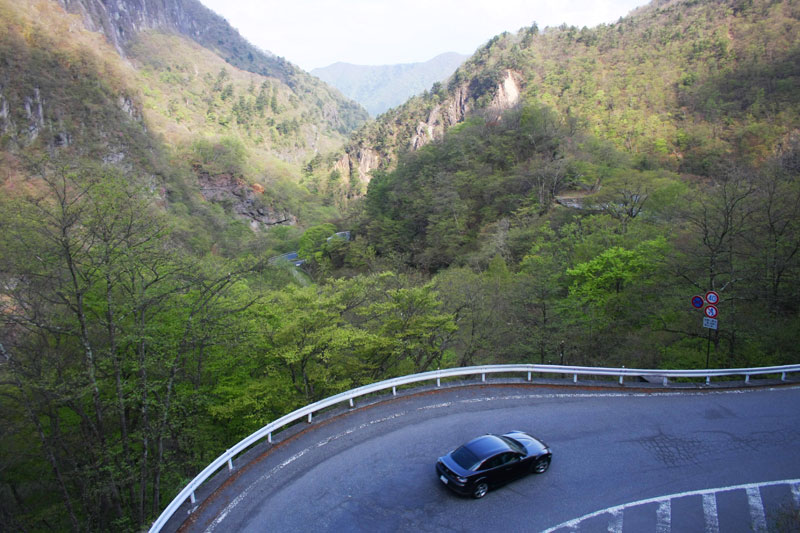
The fabulous scenery made us want to go back in the fall to drive in the north, probably including the island of Hokkaido. Now that we have gained total confidence, even driving in Tokyo, we suggest to ITN readers that what might have seemed impossible is actually an opportunity.
• As to Russia, we rented a car there for three days in May ’11. Our goal was the Golden Ring towns north of Moscow. We went with Avis (US & Can., 800/331-1212), the easiest to use, and the basics cost about $100 per day.
We furnished our own GPS, which was set up for that country and was totally accurate. In this case, we put in the name of the town or the address of our hotel.
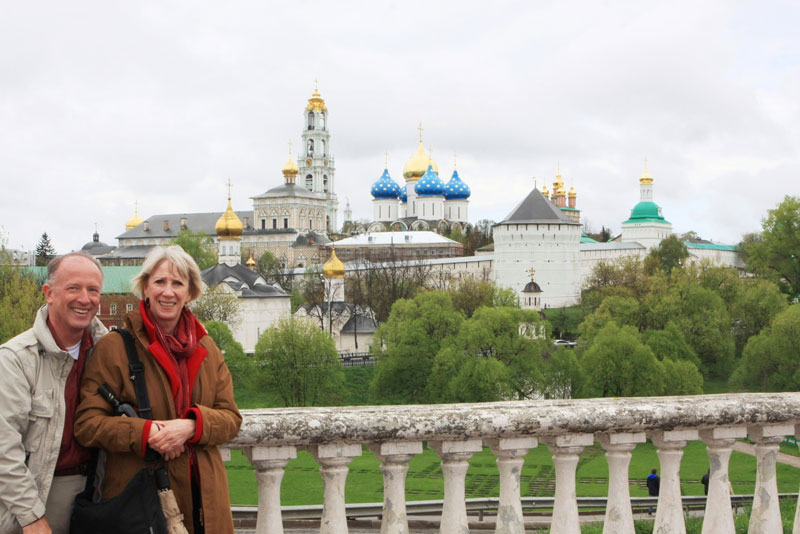
We drove from Moscow to Sergiyev Posad and the next day through the countryside to Suzdal. We reached Vladimir on the third day, then returned to Moscow, dropping the car at an Avis location at a rail station.
As in Japan, the language may be impossible to read, but more English is being added to highway signs. That said, we never found the Cyrillic or Japanese signs to be an issue. We trusted our GPS, and it worked well.
• Both of these trips were arranged for us by a very competent trip planner we found, one who takes great interest in the most important details: Jerry Simons of SRQ Travel (988 Boulevard of the Arts, Ste. 1216, Sarasota, FL 34236; 866/630-1616 or 941/726-6934, e-mail srqtravel@verizon.net).
In Japan, he got us to the most interesting places we could have gone. Excluding the rental cost but including hotels (prebooked), meals and gas, the cost of this trip was about $350 a day. We only had to get to each town.
For a Trans-Siberian Express trip from Moscow to Beijing, April 12-May 12, and our driving trip outside Moscow, he found a person to meet and guide us in each city and town plus a very fine company to take us through Mongolia.
We drove in Japan, May 3-17, 2010, never getting lost. From home, I had prebooked a car from Hertz (800/654-3001). I was even able to speak to an American in Tokyo to ask a few questions.
After experiencing the giant-kite festival in Hamamatsu, we picked up the car at a Toyota location. The two-week rental cost about ¥68,828 (near $890), with dropoff in Tokyo.
The rental included a GPS unit with instructions written in English. We didn’t use the voice instructions because they were in Japanese, but we only needed to know which way to turn, and the screen showed us that. Other than that, one “ding” meant “be ready” and a “ding, ding” meant “turn now.” (There are English-language GPSs available, but we didn’t happen to get one.)
Once in a while we had to cycle through the Japanese language to get back to the unit’s starting point. Our maps were used infrequently but were useful.
My wife took charge of the GPS and entered the appropriate phone number, yes, phone number, of each place we were headed for, be it a hotel or restaurant, or any phone number that would get us close to our exact destination. (Because addresses in Japan are based upon what was constructed first on a street, phone numbers are used.)
We knew the numbers of our prebooked hotels, and any tour book has phone numbers of other places in a town.
The fabulous scenery made us want to go back in the fall to drive in the north, probably including the island of Hokkaido. Now that we have gained total confidence, even driving in Tokyo, we suggest to ITN readers that what might have seemed impossible is actually an opportunity.
• As to Russia, we rented a car there for three days in May ’11. Our goal was the Golden Ring towns north of Moscow. We went with Avis (US & Can., 800/331-1212), the easiest to use, and the basics cost about $100 per day.
We furnished our own GPS, which was set up for that country and was totally accurate. In this case, we put in the name of the town or the address of our hotel.
We drove from Moscow to Sergiyev Posad and the next day through the countryside to Suzdal. We reached Vladimir on the third day, then returned to Moscow, dropping the car at an Avis location at a rail station.
As in Japan, the language may be impossible to read, but more English is being added to highway signs. That said, we never found the Cyrillic or Japanese signs to be an issue. We trusted our GPS, and it worked well.
• Both of these trips were arranged for us by a very competent trip planner we found, one who takes great interest in the most important details: Jerry Simons of SRQ Travel (988 Boulevard of the Arts, Ste. 1216, Sarasota, FL 34236; 866/630-1616 or 941/726-6934, e-mail srqtravel@verizon.net).
In Japan, he got us to the most interesting places we could have gone. Excluding the rental cost but including hotels (prebooked), meals and gas, the cost of this trip was about $350 a day. We only had to get to each town.
For a Trans-Siberian Express trip from Moscow to Beijing, April 12-May 12, and our driving trip outside Moscow, he found a person to meet and guide us in each city and town plus a very fine company to take us through Mongolia.
Langganan:
Postingan (Atom)